I’ll start at the beginning here, arriving at the trail head in a sense, with a story rooted in the material world. I have been enrolled in a Master of Social Work program for the past year. This was a program I ruminated over intensely about whether or not I’m going to go for it after leaving a soul sucking career in software. I wrote multiple applications and agonized over how I’m going to make the time to complete the program. I spent tens of thousands of dollars and hundreds of hours on the coursework and classes. At the beginning, I knew the coursework would be tedious, and without having a field placement in a part time program, it would be tough to stay motivated. But the end goal of doing clinical social work, of using my life experience to help others walk their paths, was a light at the end of the tunnel.
But a lot has changed in the past year. I found the coursework and classes to be even worse than I imagined. I found many of the discussions in class to be shallow. I found an overemphasis on comfort and correctness instead of discomfort and self-awareness. I found many people, professors and students alike, unwilling to confront their own fears and their own pain, and classes unprepared to help them do that. But I persisted, attending a second semester and telling myself that if I can get through this, I’ll get a field placement and be in more clinical classes and then the real work begins.
But like water in a parched desert, willpower is a finite inner resource. My mouth was already dry, my reserves were running thin, and the oasis of field work that I was hoping would be right over the next dune still felt so far. And what if instead of an oasis, I simply found more sand?
So as this second semester drew to a close, and I began getting information about potential placements, I became faced with a decision. Stay or go? Step off this path into the woods, or keep walking, hoping that nourishment lies not too far ahead? That’s to say nothing of having to navigate, ironically given the metaphor, summer courses.
Decision is a interesting word, and by now you might know that I find etymology fascinating. The root is the same as the words “homicide, suicide, matricide, etc.” It comes from the Latin, caedere, meaning to “strike down” or “slay”. And deciding does just that. By choosing one option, we are sacrificing the other. When we choose to go down one path, we also are choosing not to go down another. We can, of course, decide then to turn around and go back down that path we missed. But the decision in that moment still sacrifices possibilities. What would we have done or seen if we had decided the other way? We ultimately can never know, and we must be willing to live with this discomfort in order to decide.
So, again, I faced a decision. Do I strike down the idea of continuing in the program and becoming a licensed social worker, at least right now? Or do I sacrifice more time, money, and energy? Not a simple decision, of course. When considering such a pivotal decision, the imagery of the inner world often wells up to provide its input. We don’t have to listen to it, of course. Many people don’t, preferring to logic themselves in and out of things. And I am not saying that’s wrong, it’s a valid approach to life. But from my experience, this only ends up disconnecting us further from our hearts, and leaves us yearning for something we don’t even understand. This kind of soul pain is the cost of ignoring the heart.
The imagery and feelings within us are also often far more clear than the familiar tangled yarn of thoughts that go back and forth between options. What if I regret it? What about all the money? Is it ok if I leave? Is it ok if I decide this path is not for me? What if I can’t articulate exactly why it’s not? What if people judge me? What if I judge myself? What if I leave before fulling throwing myself into it with a field placement? Will I regret not doing that? Is it ok if I have regrets? Am I just avoiding discomfort?
What if what if what if? What if?
It’s exhausting just writing all that, let alone thinking it.
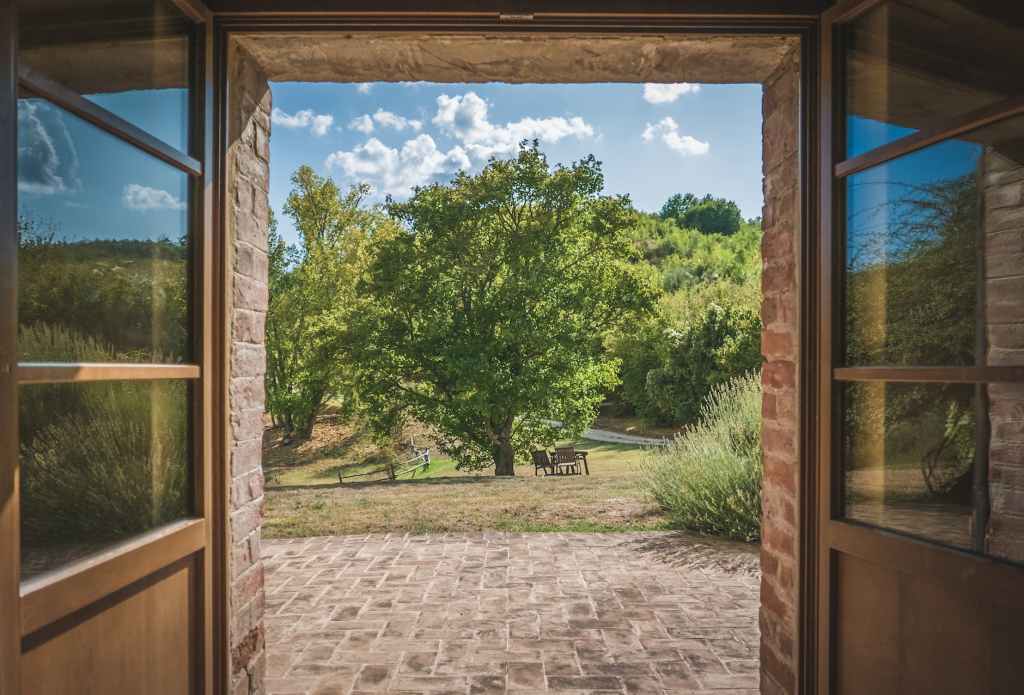
And trust me I went all around the knots over and over and over (and over) again. So then, I turned inwards. I imagined myself leaving the program and felt what that feels like. And what did it feel like to leave? Like I’m walking out of a stale, poorly lit house into a wild and untamed field. The security I felt in being in a place which is mapped out and purposefully designed is gone, and I am left to grapple with being a directionless human in the world. I was afraid of leaving, of what I might encounter outside. And there are rooms in that house that are unexplored and I don’t know what I would find in them. I felt sadness walking out and leaving those rooms unexplored.
And then, what did it feel like staying? I explore more of those rooms, not being sure what I find, and spending time and money and energy doing so. It feels like at the very best, I get a view out of the house into the field that I walked into before. Clearly I have a draw to that field as I enjoyed looking at it. And it feels safer looking out into it than being in it. But is that who I want to be? Is this where I want to be? Looking out of a window into life?
And in this imagery there is clarity. I want to live my life knowing that I did not let fear stop me from breathing fresh air. So I opened up the door and walked out. I made the decision to leave.
I became curious when I started writing this. Why did a house pop out of my subconscious? Why did a field pop up? Why did I feel afraid but drawn to the field? Why did the house feel stuffy and poorly lit? I don’t know. I have no damn idea. There is no logic to it. I’ve never thought of the program as a house before. I’ve never used the words “poorly lit” to describe it before. Rationally, being in the program and walking through that path is scary in its own way, and there aren’t logically any opportunities I am missing out on be being here. I can still go for a hike or adopt a bird or volunteer at a food bank or start an online pottery course business. Aren’t these things part of the field?
But that’s mystery and the wonder and untamed nature of the path. The subconscious is not rational. It is a roiling mess of imagery, feelings, desires, color, insanity, and insight. And the path between it and what our minds can understand is winding, and what is real and what is not is often not clear. But if we are to live in harmony with ourselves, we must face towards what it is trying to tell us. Although there may not be logic or rationality to it, there is a deep, ancient wisdom in it that will tell us who we are and what we want. A decision is an opportunity to listen to this material. And the more we listen to our hearts, ultimately, the more ourselves we will feel.

 Path Between Worlds